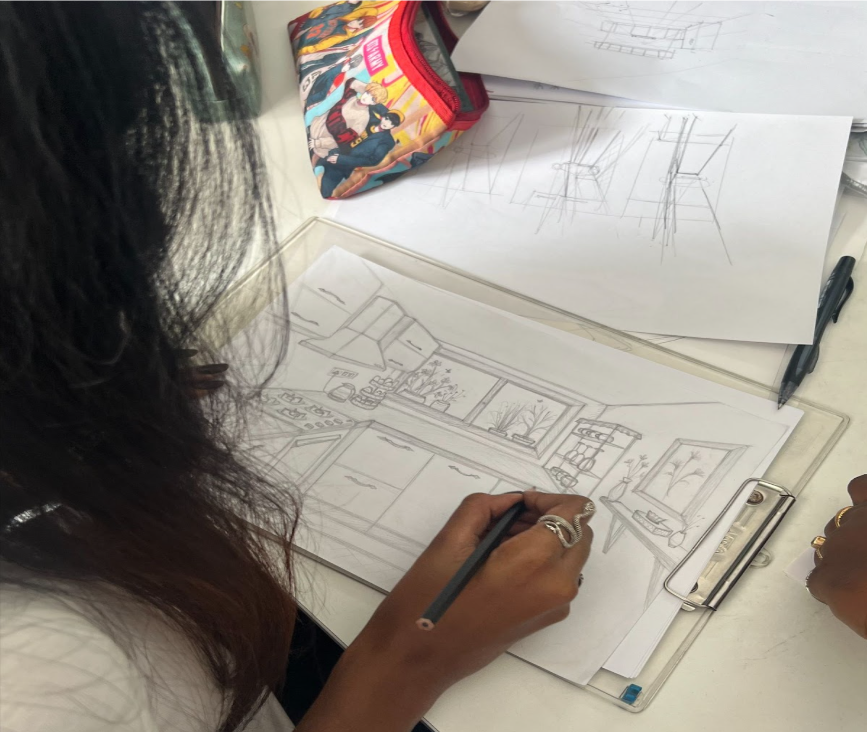
10 Reasons Why NID and NIFT Are the Next IITs in Design Education
India’s design education has evolved rapidly in the past two decades. With
institutions like the National Institute of Design (NID) and the National
Institute of Fashion Technology (NIFT) leading this change, design has become a
serious academic and career choice, not just an artistic pursuit. Here’s why NID
and NIFT are being called the next IITs — hubs of innovation, creativity, and
excellence.
At MAD School, we’ve been mentoring hundreds of students to crack
design entrance exams like NID, NIFT, UCEED, and CEED. Here’s our perspective on
why NID and NIFT are transforming into the IITs of design education in India.

1. National Importance, Global Impact
Both NID and NIFT were established by the Government of India with a vision similar to that of IITs — to set global standards in their respective fields. While IITs revolutionized science and technology education, NID and NIFT did the same for design and fashion. Their graduates are now working across the world, shaping the global creative industry.
2. A Curriculum That Balances Art, Design, and Technology
NID and NIFT combine creativity with technology. Courses include product design, communication design, animation, UI/UX, and fashion innovation, offering a multidisciplinary approach. This blend allows students to think both like artists and engineers — exactly what modern design industries demand.
3. Faculty Who Are Industry Leaders
Just as IITs boast faculty with deep research backgrounds, NID and NIFT feature mentors who are accomplished designers, entrepreneurs, and innovators. Their guidance connects classroom learning to real-world design challenges, making education hands-on and deeply relevant.
4. Alumni Who Define the Creative Industry
If IITs have produced India’s top technologists, NID and NIFT have given rise to the country’s most influential creative minds. From Sabyasachi Mukherjee, Manish Arora, and Rina Dhaka (NIFT) to Apala Lahiri Chavan, Sudarshan Khanna, and Atul Sinha (NID) — these designers have reshaped how India and the world view design. Many of them now lead global design teams at Apple, IKEA, Google, and Titan.
Also read: Top 10 Software That Can Help CEED, NIFT, and NID Express Present Ideas Professionally
5. Entrance Exams That Test Creativity and Logic
NID and NIFT entrance exams are among the most challenging in India. They test not just drawing skills but also creative problem-solving, logical reasoning, and storytelling ability — very similar in rigor to the analytical tests of IITs. Students who make it through are known for their originality and conceptual clarity.
6. Global Recognition and Industry Collaboration
Both institutes maintain partnerships with international universities and global brands. From Paris and Milan to New York and Tokyo, NID and NIFT alumni participate in student exchange programs, exhibitions, and collaborative design projects. This international exposure makes them as globally recognized as IIT graduates.
7. Research and Innovation Centers
Like IITs, NID and NIFT have dedicated research cells focusing on areas like sustainability, textile technology, human-centered design, and digital fabrication. These centers produce cutting-edge projects that merge design thinking with scientific innovation.
8. Interdisciplinary Learning Environment
The spirit of design education at NID and NIFT is based on collaboration. Students from fashion, product, graphic, and interaction design often work together on live industry projects — learning teamwork, leadership, and critical thinking in the process. This mirrors the multidisciplinary approach that IITs are known for.
Related: How to Start a Career in Design After 10th & 12th - MAD School
9. A Culture of Creative Confidence
At the core of both institutions lies a culture of pushing boundaries. Students are encouraged to question norms, experiment freely, and build portfolios that reflect individuality. This freedom fuels innovation — the same mindset that helped IITs produce entrepreneurs and visionaries.
10. Consistent Placement and Career Success
NID and NIFT graduates enjoy top placements across industries — from design studios and MNCs to tech giants and fashion houses. Their unique combination of creativity, strategy, and skill ensures they remain in high demand, much like IIT engineers in the tech world.
What About IITs That Are Already Offering Design Education?
In recent years, several IITs — including IIT Bombay (IDC School of Design), IIT Delhi (Department of Design), IIT Guwahati, and IIT Hyderabad — have launched design programs. These institutes have realized that innovation lies where design meets technology. The design departments at IITs are producing students who combine analytical precision with creative thinking, focusing on areas such as UI/UX, product design, and sustainability.
However, there’s a distinct difference in approach. IIT design programs focus on design through the lens of technology — training technically driven innovators — while NID and NIFT nurture creativity and artistic depth. Both are essential for India’s innovation ecosystem. Together, they form the complete spectrum of design education: from logic-driven invention to emotion-driven creation.
Conclusion
Design is no longer a niche discipline — it’s the language of innovation. As India continues to grow into a global design hub, NID and NIFT stand tall alongside IITs as the leading institutions shaping that future. For students dreaming of blending creativity with career success, these schools aren’t just an option — they’re the destination.
Join MAD School’s NID, NIFT, UCEED & CEED coaching programs in Chennai, Hyderabad, or Bangalore. Visit www.madschool.in to learn more or talk to our team today!